Understanding Rejection Sensitive Dysphoria (RSD)
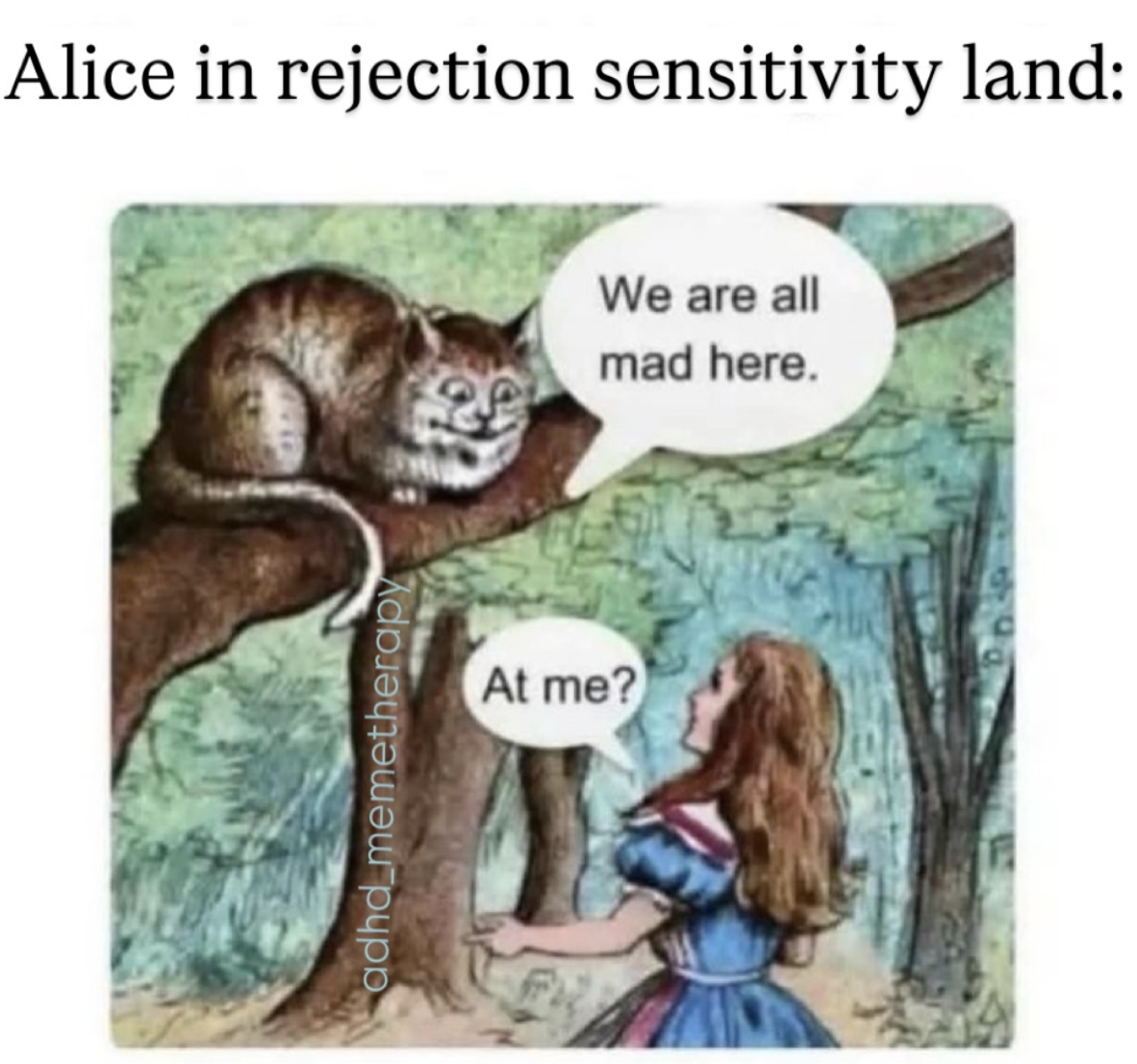
Many years ago, my boss said to me on a Friday afternoon ‘Oh Sarah, next week, can you come into my office. I need to speak with you’. He didn’t look annoyed and he sounded fairly friendly. So, naturally I assumed I was being fired. I cancelled all my weekend plans, went home and spent all weekend lamenting what I had done wrong and applying for 17 new jobs.
On Monday, he told me that I was being made permanent.
(I was seriously annoyed, couldn’t he have led with that? And, to make it all worse, I now had to turn down job interviews)
If this sounds familiar, you may have come across the term Rejection Sensitive Dysphoria (RSD).
RSD is a concept that resonates with many neurodivergent people, particularly those with ADHD. While it isn't a formal mental health diagnosis, it describes a very real experience: an intense emotional response to rejection, criticism, or perceived disapproval.
For many people, simply discovering there's a name for what they've been experiencing can be incredibly validating.
What is Rejection Sensitive Dysphoria?
Rejection Sensitive Dysphoria refers to an intense emotional response to real or perceived rejection, criticism, exclusion, or feeling as though you've let someone down.
The key word here is perceived.
Someone with RSD isn't "making things up." Rather, their brain may be especially sensitive to interpersonal cues. A delayed text reply, a change in someone's tone of voice, or constructive feedback from a manager can trigger overwhelming feelings of shame, embarrassment, sadness, or panic.
These emotional reactions often happen incredibly quickly and can feel much bigger than the situation itself.
What does RSD look like?
Everyone experiences RSD differently, but common signs include:
Replaying conversations in your head—before, during and long after they've happened.
Getting stuck in loops of "What if I said the wrong thing?"
Taking criticism very personally, even when it's delivered kindly.
Worrying that you've disappointed others.
Feeling deeply embarrassed after making a small mistake.
Working incredibly hard to be liked or avoid letting people down.
Many late-diagnosed ADHDers recognise themselves in this last point. After years of trying to "get it right", they may become expert people-pleasers, constantly trying to prevent rejection before it can happen.
Over time, this can lead to:
Feeling unsure of who you really are.
Changing yourself depending on who you're with.
Relationships that feel one-sided or emotionally draining.
Difficulty being assertive or making decisions because you're worried about upsetting someone.
These aren't character flaws. They're often understandable ways of adapting to environments where you've repeatedly felt criticised, misunderstood, or different.
Why is RSD so common in ADHD?
Many people with ADHD grow up hearing messages like:
"You're too much."
"You're too sensitive."
"If you just tried harder..."
"Why can't you be more organised?"
Receiving frequent correction, criticism or negative feedback—often from a young age—can shape how someone expects to be treated by others.
ADHD is also associated with differences in emotional regulation, meaning emotions can be experienced more intensely and take longer to settle.
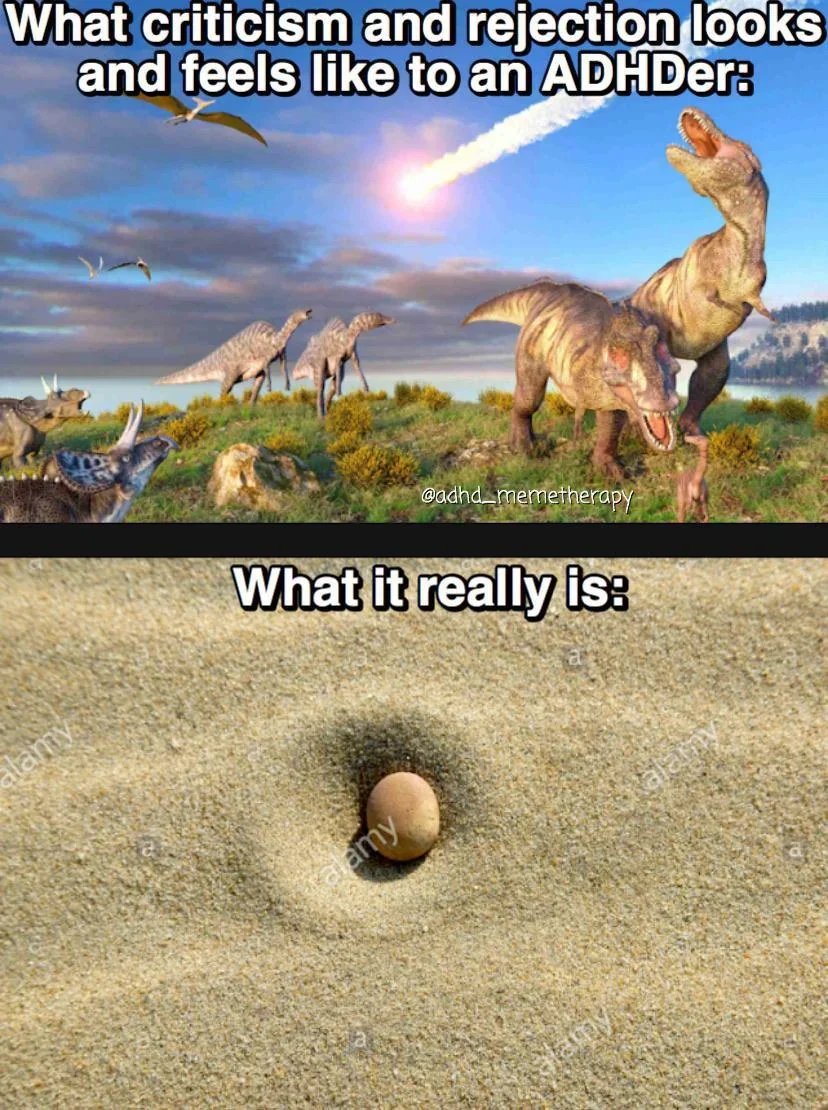
Some researchers also suggest that ADHD brains are highly attuned to noticing potential threats or changes in the environment. From an evolutionary perspective, this heightened awareness may once have been incredibly useful. In modern life, however, it can sometimes mean your brain treats an unanswered text message with the same urgency as a sabre-toothed tiger.
(Your nervous system means well. It just occasionally gets a little carried away.)
How do you know when it's RSD?
One of the most helpful things you can do is learn to recognise your own pattern.
Instead of immediately thinking, "They must be upset with me. I need to fix this," pause and notice what's happening in your body.
You might notice:
Your emotions jump from 0 to 100 within seconds.
A wave of shame or panic that feels overwhelming.
Racing or looping thoughts.
An urge to send multiple messages explaining yourself.
Feeling exhausted or emotionally "flattened" afterwards.
Many people also notice that RSD is more likely to show up when they're already overwhelmed—after a busy week, during sensory overload, when they're low on energy, or when interacting with someone whose opinion really matters.
Many women also report that RSD feels more intense during the premenstrual phase of their cycle.
Managing RSD
RSD can be one of the most distressing aspects of living with ADHD. The feeling of the RSD often doesn’t go away either. Even with medication management. The goal is to notice the triggers and tolerate the feeling.
In the moment
When RSD is activated:
Name it. Simply recognising it as RSD is helpful.
Resist the urge to immediately fix the situation. Future You will probably be grateful you didn't send five follow-up messages apologising for something that may not have happened or clarifying what you meant when you said...
Practice self-compassion. Your nervous system is responding to something it believes is important.
Reduce sensory overload where possible.
Use distress tolerance strategies while the emotion settles. Go for a walk, have a shower, exercise, read a book, watch a favourite movie—or, if it helps, enjoy a few relatable ADHD reels. (Research is still catching up on this intervention!)
What doesn't help?
Telling yourself to "stop being so sensitive", shaming yourself, or deciding you're simply "bad at people."
If those strategies worked, they would have worked by now.
Long-term strategies
Managing RSD is often about reducing your overall stress load rather than trying to eliminate difficult emotions altogether.
Helpful strategies include:
Learning about Spoon Theory and recognising when your capacity is running low.
Identifying situations or people that consistently trigger rejection sensitivity.
Building accommodations into your life before you become overwhelmed.
Practising noticing the early signs of RSD with curiosity rather than judgement.
Working on self-compassion and emotional regulation in therapy.
Spending more time with people who value authenticity over perfection.
Over time, many people find they become better at recognising RSD early and responding thoughtfully rather than reactively.
You're not alone
One of the most common things people say after learning about RSD is:
"This explains so much."
Whether or not the label feels like the right fit for you, intense emotional responses to rejection deserve understanding—not judgement.
If RSD is affecting your relationships, work, study or confidence, working with a psychologist who takes a neuroaffirming approach can help you understand what's happening, develop practical strategies, and build a kinder relationship with yourself.
Helpful Resources
Why Does Everybody Hate Me? – Alex Partridge
ADHD Chatter Podcast
The Neurodivergent Woman Podcast
ADHD Meme Therapy on Instagram (because sometimes the best therapy starts with, "Wait… it's not just me?")